
Back in February, we shared how we use Net Promoter Score (NPS) feedback to improve reporting, insight and the overall NewZapp experience. You can read that previous blog here.
At the time, we talked about the importance of listening to customers. Since then, that feedback process has evolved into something far more important for us as a business: a truly customer-led approach to platform development, support and service improvement.
And the results speak for themselves.
In Q1 2026, NewZapp achieved its highest NPS score ever, reaching 70 following back-to-back quarterly improvements.
But the most important part of this story is not the number itself. It is how we got there.
When the Scores Told Us Something Was Wrong
For a long time, we treated NPS in the same way many organisations do.
We monitored the scores, reviewed trends and continued delivering against our development roadmap and customer service targets. We believed we were building the right features and delivering the right experience for our customers.
Then Q3 2025 happened.
Our NPS score dropped to 39.
Now, it is important to put that number into context. Net Promoter Score ranges from -100 to +100, meaning a score of 39 is still considered respectable by many standards.
But for us, it was not good enough.
More importantly, we realised the score itself was not the real problem. The issue was that we were collecting feedback without fully understanding the reasons behind it.
That became the turning point.
Turning Scores Into Conversations
Instead of simply recording NPS results and moving on, we changed our approach completely.
We began personally contacting every customer who scored us below a 9 or 10.
We asked direct and honest questions:
- What could we improve?
- What frustrations were you experiencing?
- What functionality was missing?
- What would make you genuinely recommend NewZapp to others?
- How could we better support your organisation and communication goals?
Those conversations gave us something far more valuable than a score alone: real insight.
For the first time, we could clearly see the gap between what we believed customers wanted and what customers were actually telling us they needed.
Discovering Our Own Bias
One of the biggest lessons we learned was that product development naturally carries internal bias.
Like many software companies, we had strong views on what we believed the platform should do, where development should focus and what would deliver the greatest value.
But customer feedback challenged some of those assumptions.
In several areas, customers were not asking for the features we thought were most important. Instead, they highlighted day-to-day friction points, usability improvements, workflow simplification and reporting clarity.
That feedback changed how we prioritised development.
Rather than relying primarily on internal assumptions, we began creating development tasks and roadmap priorities directly from customer conversations and customer outcomes.
The result was a more focused, practical and customer-led approach to platform improvement.

Customer-Led Development in Action
The feedback we received did not sit in reports or spreadsheets. It directly influenced the way the NewZapp platform evolved over the following quarters.
One of the biggest areas of focus was reporting and insight.
Customers told us they wanted more than traditional engagement metrics. They wanted clearer visibility into how communications were performing, how audiences were engaging with content and how they could continuously improve communication effectiveness.
In response, we introduced a completely new reporting engine alongside a significantly enhanced Insights Dashboard, delivering advanced metrics including:
- Sentiment analysis
- Average read time
- Best time to send
- Most frequent send time
- Engagement by subject word cloud
- Engagement by subject length
These additions gave communication teams deeper operational insight into audience behaviour and campaign performance.
We also listened carefully to customer feedback around usability and navigation.
To improve the overall user experience, we introduced a brand new left-side navigation structure designed to make the platform faster, more intuitive and easier to navigate day-to-day. The goal was simple: reduce friction and help users find the tools and functionality they need more quickly.
Alongside larger feature development, we also focused heavily on refinement and usability improvements across the platform.
This included:
- Resolving long-standing bugs
- Improving UI feedback and messaging within dialogs and workflows
- Reducing avoidable support requests by making system responses clearer and more informative
- Streamlining common user journeys
We also continued investing in features customers specifically requested to improve communication effectiveness and content management.
This included:
- Enhanced Survey Reporting capabilities
- A new Image and Document Manager to simplify asset management
- Dynamic Content functionality, allowing communication teams to personalise content for different audience cohorts within a single communication
That last feature in particular came directly from organisations looking for better ways to deliver more targeted, relevant and engaging communications without increasing workload or complexity.
Most importantly, these were not internally assumed priorities. They were improvements driven directly by customer conversations, frustrations and goals.
That shift fundamentally changed how we prioritise development at NewZapp.
Speak with us and find out more

The Result: Back-to-Back NPS Improvements
The changes did not transform results overnight, nor did we expect them to.
But quarter by quarter, we began to see customer sentiment improve.
Following the Q3 2025 score of 39:
- Q4 2025 increased to 57
- Q1 2026 increased again to 70, our highest NPS score ever
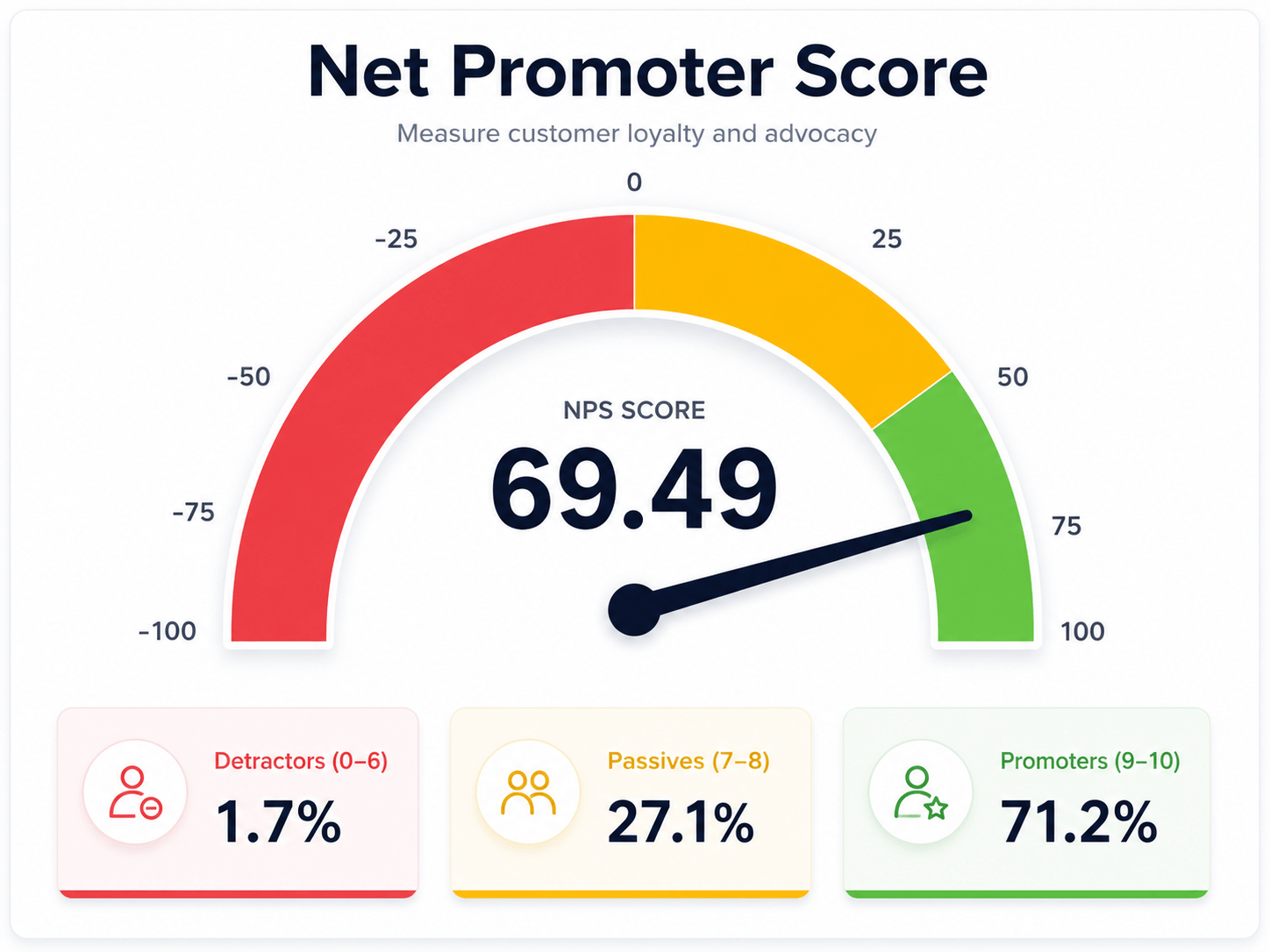
More importantly than the numbers themselves, the improvement validated something critical for us as a business: when customers feel genuinely listened to, product improvement becomes more meaningful, focused and impactful.
NPS is no longer just a reporting metric for us. It has become an ongoing listening mechanism that helps shape how we develop, support and improve the NewZapp platform.
Building a Better Omnichannel Communications Platform
As organisations continue to face increasing communication challenges across email, mobile, surveys, digital signage, QR codes and other channels, the need for reliable, user-focused communication technology has never been greater.
That is why customer feedback matters so much.
Our goal is not simply to add more features. It is to build an omnichannel communications platform that genuinely helps organisations communicate more effectively, more reliably and with greater confidence.
The only way to achieve that is by listening carefully to the people using the platform every day.
Looking Ahead
While we are incredibly proud of achieving our highest-ever NPS score, the biggest lesson from this journey has been the importance of listening more closely and acting more intentionally on customer feedback.
The strongest improvements did not happen because we assumed we knew the answers.
They happened because our customers told us what mattered most to them — and we listened.
That approach will continue to shape the future of NewZapp.
More broadly, it has reinforced something we believe many organisations can benefit from: NPS is most valuable when it becomes more than just a score.
The real value comes from the conversations behind the numbers, the willingness to challenge internal assumptions and the commitment to act on what customers are actually saying.