The role of an internal communication professional has evolved. Merely disseminating major news or changes to employees falls short. This limited approach to internal communication risks disengaging employees and undermining your internal communication strategy. In this blog, we delve into the primary internal comms challenges encountered by internal communicators and offer strategies to surmount them.
Non-Desk Employees
84% of Non-Desk Employees feel they do not receive enough support and communication to do their job.
A fundamental internal comms challenge is engaging with workers who have limited or even no access to their inbox or company intranet, this creates a big logistical challenge. On the bright side, there are multiple ways you can get around this:
- Effective use of Line Managers
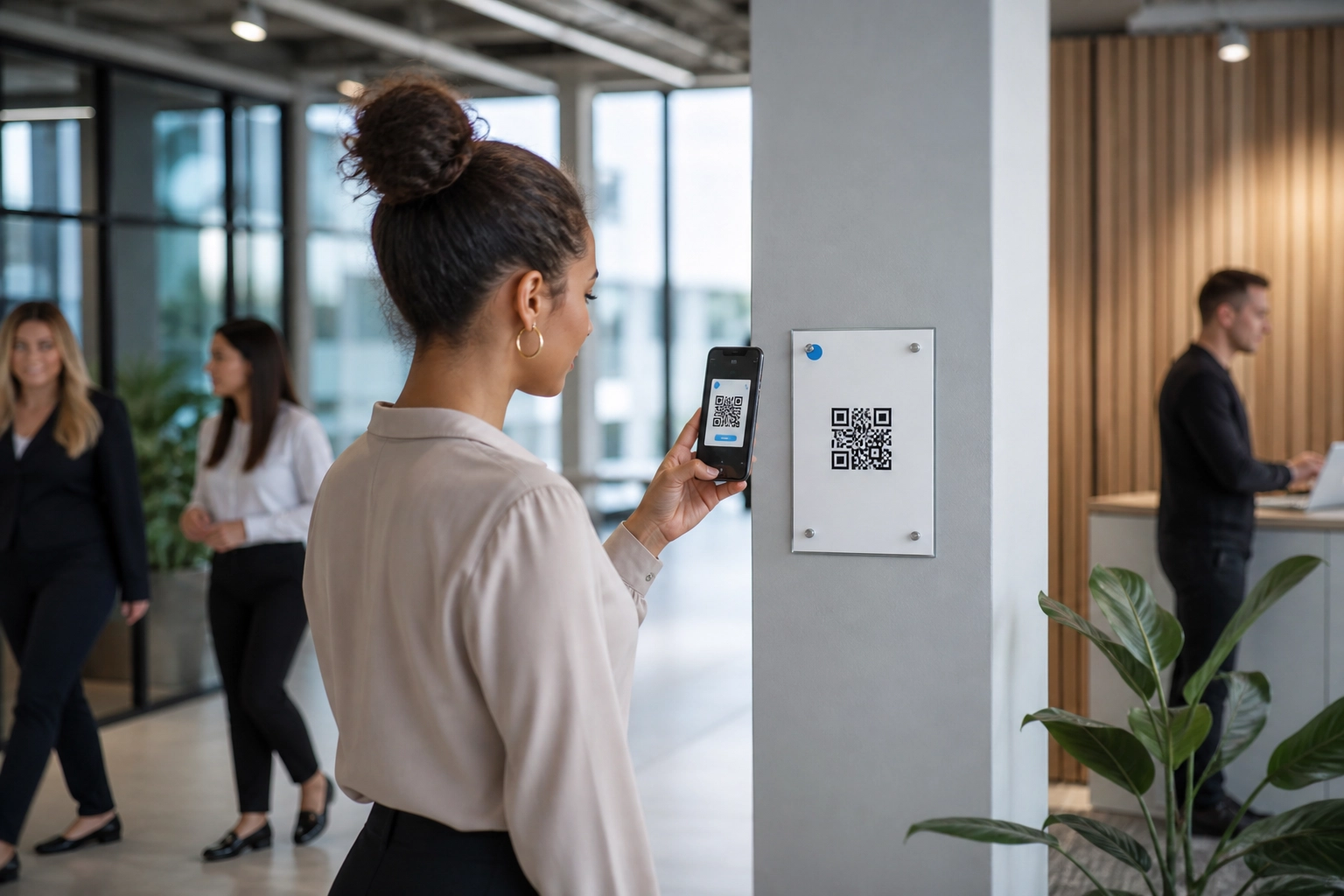
- Posters with link/QR codes leading to intranet or landing page
- Employee communications app
By using any combination of these three lines of communication, you will immediately see an improvement in non-desk workers’ engagement.
While an employee communications app will require a budget allocated towards it, start with the first two suggestions. Arm your line managers with the information and training to be able to accurately distribute comms to non desk workers.
And have your important notices printed out on a poster with a link/QR code leading to a landing page for more information. Using a QR code allows employees to quickly scan with their phone.
Employee communications apps are the best of both worlds with extra. You can send important notices straight to the palm of their hands as well as receive feedback directly. An app also gives the added benefit of receiving analytics off of the communications sent, so you know what works.
Some employee communications apps, like VRAMP, double as an employee survey app so you can also gain insight into employee satisfaction without needing to burden your line managers.
Transparency
To cultivate trust in the workplace, transparency between employees and leaders is paramount. When information is held back, employees will often lose faith in their employers. This often leads to an environment where they do not want to share ideas or even ask questions.
To develop transparency you need;
- Channels to communicate business decisions to employees
- Promote the questioning of those decisions
- A platform for employees to share their thoughts, allowing you insight into those potentially affected by the business decision.
Developing transparency in your organisation’s culture by promoting communication in the form of questions and sharing ideas will not only improve transparency but engagement and retention as well.
Internal Comms Channels
We live in an environment where more often equals better, and this is no different in the internal communications world, with numerous channels to communicate to employees it can get overwhelming with managing them all. And this feeling is shared among your employees as well, if too much information is being thrown at them from every angle it can lead to them becoming disengaged.
It is important to take a step back and see how your communications are dispersed and via which channel. While your employees adore the internal podcasts they may not be the best channel to communicate large business decisions.
You need to develop consistency within frequency as well as the type of information sent via your channels.
For example; you may choose email as the most appropriate channel to send out important information as it goes straight to your employee’s inboxes where, if you were using NewZapp, you would receive analytics informing you on who has or hasn’t opened the email.
To properly enforce this idea of consistency, you need to create a plan that encompasses the channels, frequency and content you’ll be sending. and use a content calendar to schedule them.
Gather internal comms analytics, through a platform or by conducting surveys, to ensure you are making informed decisions on when, where, and how your employees engage with your content.
Remote employees
Similar to non-desk employees, remote employees are often seen as “distant” and difficult to communicate with. However, they have the huge advantage of having access to a laptop or computer.
While you may not have the human element, communicating with remote employees has been made very easy through channels like; outlook, teams, slack and so on. However, the difficulty with remote employees comes with engagement.
To engage remote employees you need to use content that incorporates visual and verbal elements.
Use videos and gifs to make emails more lively. Hold virtual events that remote employees can attend. And where possible hold meetings or work events in a location that is easily accessible, this could be at a cafe not just in an office, to help add in that physical element that remote working misses.
Low Engagement
Little or no feedback on company news.
29% of employees say their organisation’s current method of internal communication isn’t working. They feel disengaged and out of the loop.
Good employee engagement is a top contributing factor to high-performance growth culture business and an undeniable producer of productivity and payback.
Getting a better engagement rate requires three key values:
- Employees want to be known and recognised as important individuals to the business.
- They want to be valued. Employees want to know the company cares about them.
- Empowerment. Some employees want increased responsibility, while others may want things like training and development.
Embracing a two-way engagement strategy to achieve a higher engagement rate and employee productivity with definitely help you overcome poor communication practices.
Leadership Communications
Leaders have a lot of power over the success of communication within an organisation, not just in terms of control over the business, but also in the sense of being role models.
Leaders often set the example, and if they show they do not care then, why should employees? Through well received leadership communication comes a deeper connection between employees and leaders, and a larger number of willing to give employee feedback.
When leaders communicate effectively, they can build trust and make employees feel like they are part of something important. Communication is a two-way street – it’s not just about what leaders say, but how they say it. If a leader delivers information in a way that is open to debate and allows questions from employees then this will encourage them to also participate in the process by asking questions back.
Employee Feedback
Feedback and analytics are key to any internal communication strategy. You need it to measure engagement and gauge opinion whilst your employees appreciate the fact their voice is heard.
The focus should really be on measuring the impact of your internal communications on employee engagement, motivation and productivity. You need to be on top of your employee advocacy. Engagement metrics go a long way to help build a suitable program for this and will help you both identify and overcome internal comms challenges.
Communication Fatigue
Overloaded employee inboxes are a common problem.
Comms fatigue is a state that occurs when employees get tired of receiving frequent communications. They start to ignore messages, delete them, or unsubscribe.
Comms fatigue is mostly the result of a company sending employees irrelevant information or sending too frequently. Seeing gradual decrease in employee engagement numbers like opens and clicks is a clear indicator of a tired and disengaged workforce.
An employee engagement app like VRAMP is designed so that the flow of information is faster, error free and more targeted to the wants and needs of the recipient. A solution such as this will not only help you overcome internal comms challenges and communication fatigue, it will also help you attract a younger generation to work with you.