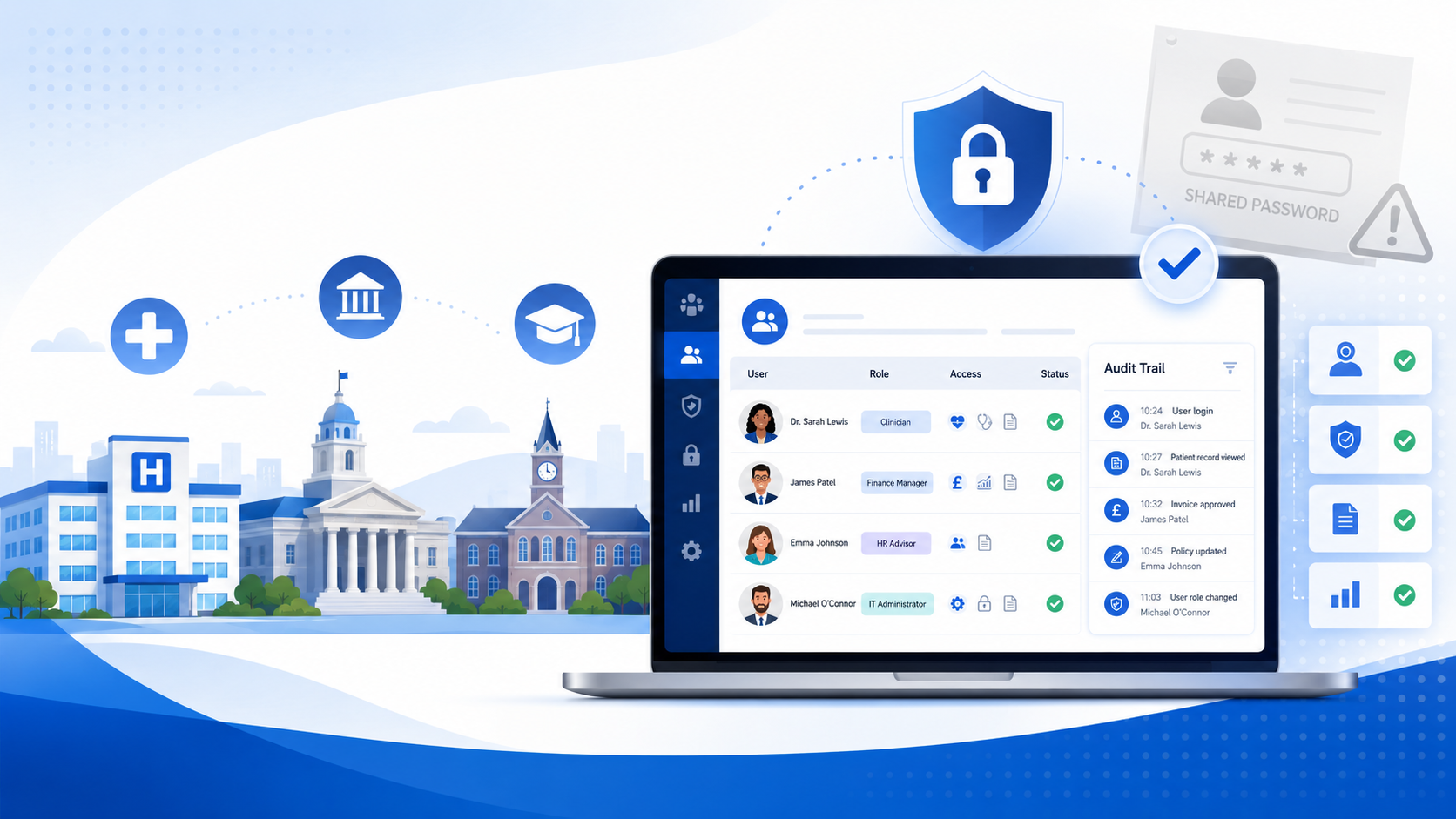
The importance of named user logins
Why are named user logins so important when accessing NewZapp? Particularly for organisations with formal governance, information security, data protection or audit requirements.
Modern email analytics are not as straightforward as they once were. If you’re reporting to leadership using open rates alone, especially in a Microsoft 365 corporate environment, you’re likely working with distorted data.
Understanding exclude-prefetch-activity is now fundamental to providing credible, strategic insight.
Email engagement metrics (like open rates) have traditionally been tracked using an invisible tracking pixel — when the pixel loads, that signals an “open.” But modern email clients and network systems (e.g., Apple Mail Privacy Protection, Microsoft 365 Protection and Defender Layers, Gmail prefetching, spam/security scanners) will automatically load those pixels before a person ever sees the email.
This happens because:
In Microsoft 365 environments — which dominate corporate organisations — emails pass through Exchange Online Protection and Microsoft Defender layers. These systems may:
This is known as prefetch activity — automated system activity recorded as human interaction.
Platforms that offer exclude-prefetch-activity attempt to filter out this non-human behaviour so reported engagement reflects genuine user interaction.
For a deeper explanation of how Outlook and Microsoft 365 environments contribute to this effect, see the FAQ section below.
When you exclude prefetch or bot opens:
In other words, it’s better to see true relevance even if reach appears lower.
Internal communications teams constantly balance two competing needs:
Reach
“How many people received our message?”
Relevance
“How many people actually engaged meaningfully?”
Prefetch distortion primarily affects relevance metrics — especially opens. If you present inflated open rates to leadership:
Excluding prefetch activity protects your insight integrity — even if reported open rates drop.
Lower but honest engagement data is far more valuable than impressive but artificial metrics.
For additional insights into strategic internal communications, visit our internal communications resources page.
Book a quick Teams meeting with our Operations Director Darren using the calendar below.
In our 2021 article Is your Email Communications Provider lying to you? We outline how some providers report significantly inflated engagement due to bot and automated activity.
In one example, another platform reported over 65,000 clicks — while NewZapp’s filtered data showed under 5,000 genuine interactions.
The difference?
NewZapp removes:
Filtering out non-human interaction
NewZapp actively detects and removes spambot or automated clicks — the kinds of activity that inflate metrics on other platforms. In the blog example, one provider reported ~65k clicks, while NewZapp’s cleaned data showed ~4.9k — and NewZapp’s numbers were true measures of engagement.
This matters because:
Accurate, honest reporting over vanity metrics
Rather than showcasing artificially high metrics, NewZapp focuses on safe, accurate analytics you can trust to inform strategy — especially important when you’re reporting to leadership or the board.
Deliverability monitoring
NewZapp also includes tracking of how reliably emails are delivered to recipients, reducing the ambiguity between was this message delivered and was this message engaged with — a key distinction in internal comms.
Delivery metrics help validate reach — and how email deliverability impacts inbox placement is foundational to ensuring your message actually arrives and can be accurately interpreted (see email deliverability issues and fixes).
This ensures that when you report engagement to stakeholders, you’re reporting real behaviour, not system noise. For teams operating in Microsoft 365 corporate environments, this distinction is critical.
When you brief stakeholders, here are the core points to emphasise:
Always look beyond open rates
Open rates are less trustworthy now unless prefetch and bot activity are excluded. Focus on:
These are stronger evidence of relevance and engagement.
Be transparent about data limitations
Explain that changes in email client behaviour (privacy protections, proxying) make traditional metrics noisy — but modern platforms can reduce that noise.
Tie metrics to outcomes
Reach is necessary (everyone got the message). Relevance is transformational (people acted on it). Accurate exclusion of prefetch activity helps you evaluate the latter more reliably.
Benchmark responsibly
Comparing internal email programmes requires consistent methodologies — especially when some tools include prefetch opens and others (like NewZapp) exclude them. Clarify methodology when presenting to leadership
Fill out the quick form to get a guided walkthrough of our award winning communications platform. The demo takes approximately 30 mins and is done online at a time that suits you. We’ll take a look at the following areas:
Exclude-prefetch-activity is no longer a niche technical setting — it’s central to credible reporting in modern internal communications. Platforms that account for and exclude automated opens/clicks give you true insight into employee engagement — helping you:
Report honestly to leaders
Avoid chasing vanity metrics
Align communications strategy with real behaviour
Make better decisions based on solid evidence
If you position your analytics this way, leadership won’t just see reach — they’ll understand real organisational impact.
In corporate Microsoft 365 environments, email is processed by multiple security layers before it reaches an employee.
These often include:
During this process, security systems may:
All of this can trigger:
This behaviour is automated and security-driven — not employee-driven.
As a result, some reported engagement metrics in Outlook environments may reflect system inspection rather than genuine human interaction.
In large corporate environments, especially those with strict cybersecurity policies, a significant proportion of open activity can be system-generated rather than human.
This is precisely why exclude-prefetch-activity filtering is essential for internal comms analytics.
Without it, you may believe your message resonated — when in reality it was simply scanned.
Prefetch activity refers to automated systems loading email content — including tracking pixels or links — before a human opens the message.
This may be triggered by:
When prefetch activity is not excluded, it can inflate open rates and distort engagement reporting.
Exclude-prefetch-activity is a filtering mechanism that removes automated, non-human interactions from engagement reports.
This includes:
The goal is to ensure reported engagement reflects genuine human behaviour rather than system-generated events.
Open rates rely on tracking pixels being loaded.
In corporate environments — particularly those using Microsoft 365 — pixels may be triggered by:
This means an “open” does not always mean the email was read.
Open rates should be interpreted as directional visibility metrics, not proof of engagement.
Yes.
Microsoft Defender’s Safe Links feature rewrites and checks URLs for malicious content. During this inspection process, links may be activated automatically.
Some email platforms record this as a click, even though no employee interacted with the message.
Platforms that filter automated activity reduce the likelihood of these false-positive click reports.
To measure meaningful engagement, internal comms teams should focus on:
These signals demonstrate relevance and intent — not just visibility.
Reach measures how many employees received the message.
Relevance measures how many employees meaningfully engaged with it.
Prefetch activity affects relevance metrics more than reach metrics.
Separating these two concepts improves the quality of insight provided to leadership.
Differences in engagement reporting often come down to filtering standards.
Platforms that do not exclude:
may report significantly higher open and click rates.
Higher numbers do not necessarily mean better performance — they may reflect less stringent filtering.
Yes — but it improves accuracy.
When automated activity is removed:
However, the remaining data more accurately reflects human interaction, which is more valuable for strategic decision-making.
Leadership relies on internal comms data to assess:
If metrics are inflated by automated activity, strategic decisions may be based on misleading signals.
Accurate, filtered reporting enables:
Honest data builds long-term trust — internally and organisationally.

Operations Director
Bon Jovi loving gym junkie. I spend most of my time thinking about the impact technology is having on our society and the world of internal communications.
Complete the form to get a guided walkthrough of our award winning communications platform. The demo takes approximately 30 mins and is done online at a time that suits you. We’ll take a look at the following areas:
The easy to use email editor
Creating a survey
Contact management
Improving delivery & response rates
Detailed result analytics
After the demo, get your own NewZapp account free for 30 days.

Why are named user logins so important when accessing NewZapp? Particularly for organisations with formal governance, information security, data protection or audit requirements.

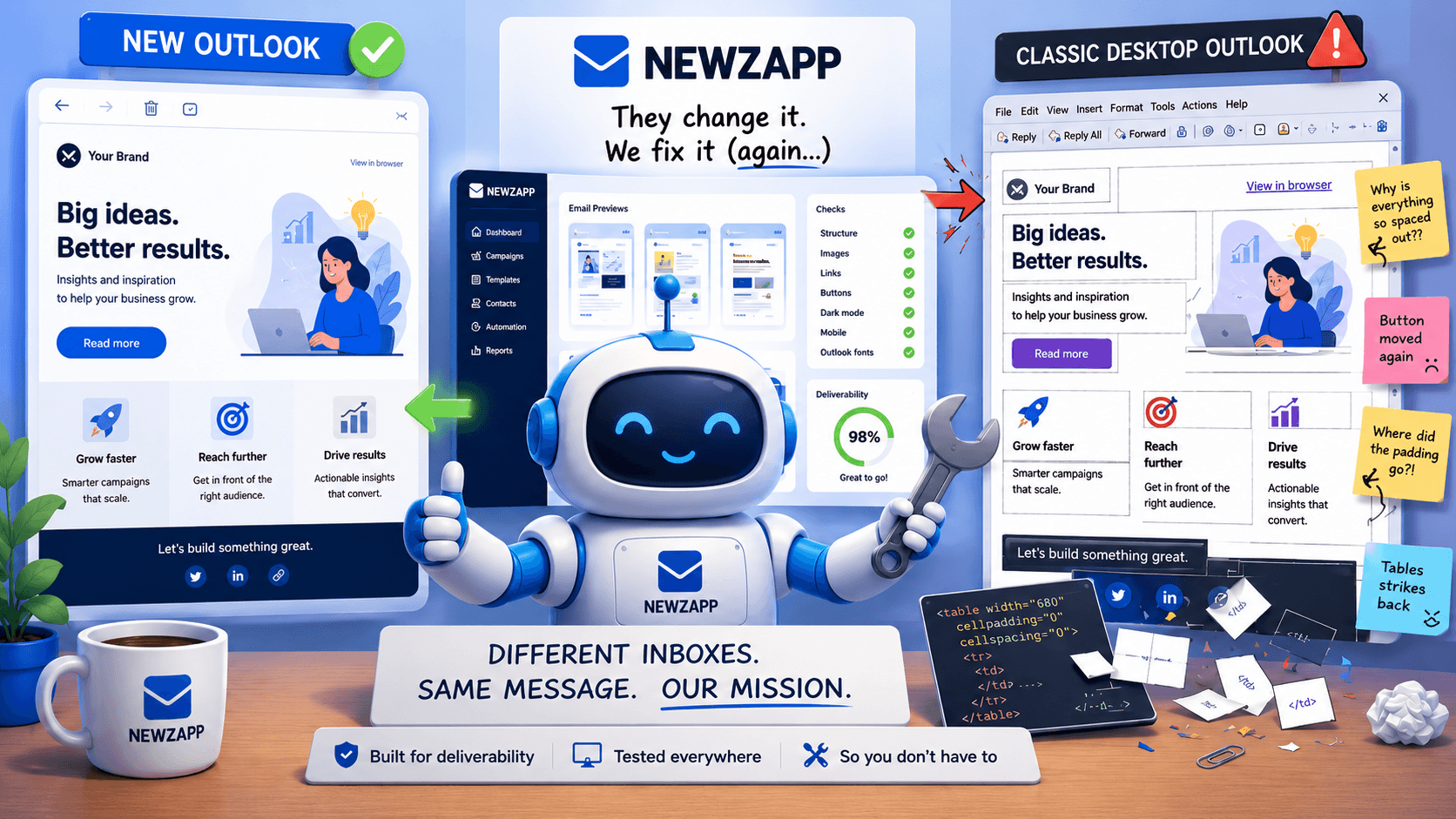
There are many humbling experiences in life. Assembling flat-pack furniture. Explaining cryptocurrency to your parents. Watching a beautifully designed HTML email enter Microsoft Outlook and come out looking like it was formatted during a power cut. Welcome to HTML email rendering. Please keep your arms and legs inside the table layout at all times.

In Q1 2026, NewZapp achieved its highest NPS score ever, reaching 70 following back-to-back quarterly improvements. But the most important part of this story is not the number itself. It is how we got there.

This article explores the ‘last mile’ problem in NHS internal communications and how organisations can ensure reliable delivery to frontline clinicians.

Discover 10 audit questions, 5 priorities, and 3 metrics that define effective internal communications in 2026—plus how to measure real impact.

Accessible communication is critical to safeguarding in further education. This practical guide explores six common communication failures in FE colleges and how to fix them using clear, inclusive, and measurable strategies.

NewZapp has introduced a simplified interface designed around how users actually work. The new side navigation, collapsible menu and performance upgrades make the platform easier to navigate, faster to use and better suited to modern communication workflows.

Move beyond open rates. Learn how research-backed relevance metrics improve trust, engagement and impact in public sector communications.

When we ask customers to complete our Net Promoter Score (NPS) survey, we’re not chasing a number. We’re asking a simple question to support a

As internal comms plans and budgets are signed off, many teams carry hidden governance and compliance risks. This article explores why internal communications risk is increasing — and how a practical risk matrix can help teams surface and manage it early.