
Why Filling In That “Quick NPS Survey” Actually Matters (A Lot More Than You Think)

newzapp-nps-scoring-importance

Why Filling In That “Quick NPS Survey” Actually Matters (A Lot More Than You Think)

The Net Promoter Score (NPS) pop up in your account is actually one of the most powerful ways you, as a customer, can shape how NewZapp develops, improve, and treat you in the future.

Once a quarter – when you login. you see the pop up…

“On a scale of 0–10, how likely are you to recommend us to a friend or colleague?”

You roll your eyes, tap a random number, or ignore it completely.

We get it. We’re all busy, and nobody wakes up excited to “do some surveys today”.

But that tiny question – the Net Promoter Score (NPS) one – is actually one of the most powerful ways you, as a customer, can shape how NewZapp behaves, improves, and treats you in the future.

Let’s break down why completing an NPS survey is worth your 20 seconds.

First up: what is NPS?

NPS (Net Promoter Score) is a simple way for us to measure customer loyalty and satisfaction.

You’ll usually see:

“How likely are you to recommend us to a friend or colleague?”
0 = Not at all likely
10 = Extremely likely

Sometimes there’s a follow-up question like:

“What’s the main reason for your score?”

Behind the scenes, your answer does a lot more than sit in a spreadsheet gathering dust.

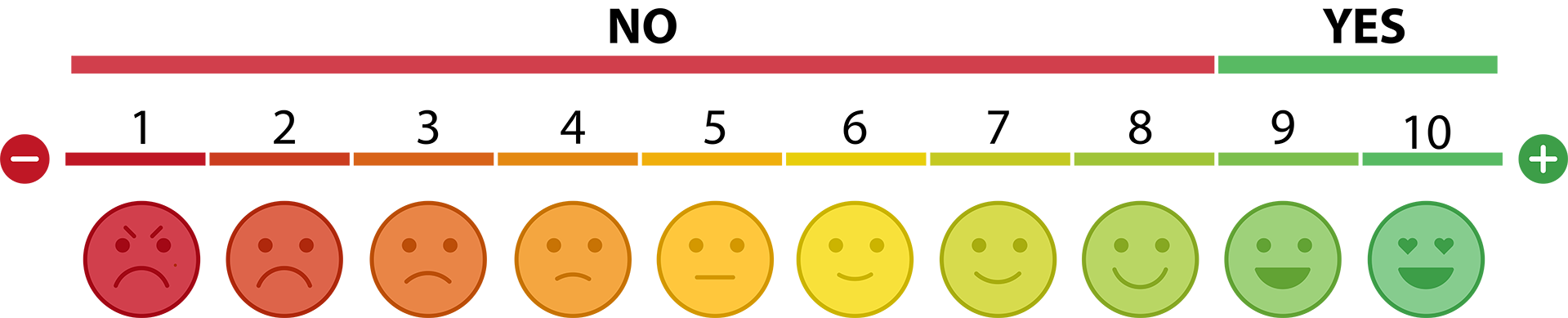
In a nutshell, it’s a Yes/No question with 10 options…

Yes – Then the score is 9 or a 10

No – Then the score is 1 to 6

7 and 8 are bogie numbers in NPS terms, they carry no real value so it would be great if these can be avoided.

We’re not trying to coach you here, just trying to ensure your feedback is valid and not lost “sitting on the fence” as it were.
nps-scoring-yes-no

Feedback is CRUCIAL

And to stress again, it is so vitally important you tell us why you scored us like you did.

Negative feedback – helps us improve your service and software.

Positive feedback – helps us reward the hard work of the team.

Why we are obsessed with NPS (and why you should care)

From the our side, NPS is a big deal because it:

  1. Shows how happy (or unhappy) our customers really are
  2. Highlights what’s working and what’s broken
  3. Influences where our development, money, time, and resources go next

But here’s the bit people miss:
NPS doesn’t just help us – it directly affects the experience you get as a customer.

If you’re fed up, thrilled, or somewhere in between, NPS is your direct line into the decision making!

Your Feedback – Your Platform.

Every single comment you leave, is considered and acted on. If you visit our updated page here,  you will see so many recent updates that are a direct result of feedback, including:

  • An all new image asset library
  • Reporting features showing read times on email campaigns
  • Reporting by topic
  • Campaign comparison (A/B testing)
  • Improved email campaign Audience selection
  • New User permissions (Admin, editor, viewer etc)
  • Using NewZapp on multiple tabs

In Summary

Thank you for your continued support. Our high scores reflect the trust, satisfaction, and loyalty of our customers – many of whom actively recommend our service to others.

We’re proud of what this says about the experience we provide, and we’re committed to building on this success. Your vote and feedback mean a great deal to us, and we truly appreciate you being part of our journey.


darren hepburn

Darren Hepburn

Operations Director

Bon Jovi loving gym junkie and F1 fan. I spend most of my time thinking about the impact technology is having on our society and the world of internal communications.
And the rest of the time, biscuits.

See how NewZapp helps comms teams reach every subscriber and prove engagement in 30 minutes.

Fill out the form to get a guided walkthrough of our award winning communications platform. The demo takes approximately 30 mins and is done online at a time that suits you. We’ll take a look at the following areas:
  • The easy to use email editor
  • Creating a survey
  • Contact management
  • Improving delivery & response rates
  • Detailed result analytics
After the demo, get your own NewZapp account free for 30 days.

Book A Demo

Filter Categories

Branded QR codes fail when they sit in corridors nobody pauses in. This placement playbook shows how to audit surfaces by moment of need and dwell time, tier them, and test what actually gets scanned.
Polite agreement is the most common answer to an engagement survey and the least useful one. Here is how to write questions people can answer candidly, with rewrites you can reuse.
Staff emails compete with everything else in the inbox. This analysis looks at why internal communications struggle for attention, what open and click data really proves, and how to build a measurement routine you can take to stakeholders.
Feature grids make every internal communications platform look the same. This evaluation framework covers what actually separates them: where employee data sits, what your reporting can prove, and whether feedback lives next to the send.
Email alone leaves frontline and deskless staff out of the loop. This playbook shows where to place QR codes, what each one should link to, and how to measure whether anyone acted.
Public sector stakeholder updates demand more than a send button. This analysis sets out the hosting, data protection and measurement standards a compliant UK email updates platform should meet.

Closing the Internal Communication Gap in UK Further Education

UK Further Education (FE) colleges are among the most complex and mission‑critical institutions in the public sector. They sit at the intersection of education, skills, employability, social mobility and local economic growth. Unlike universities, FE colleges are intensely place‑based and delivery‑focused, serving diverse learner cohorts including 16–18 students, adult learners, apprentices, employers and communities.

Read The Blog »

What Causes Internal Emails to Miss Staff Inboxes

Are your internal emails reaching every member of staff? For communications teams in large organisations, the answer is often less certain than you’d expect. Messages that never arrive at the inbox can undermine trust, delay critical updates, and leave colleagues without the information they need to do their jobs safely.

Read The Blog »